## What we are going to learn?
Hello Hello Hello Guys this is GDR and welcome back to my another chaotic class and today we gonna learn about type of communication
## Types of Communication and Communication Barriers 😂💀
In this lesson, we'll understand the different types of communication and the problems that can prevent communication from working properly. We'll keep the definitions professional enough for exams and the explanations funny enough to stop your brain from uninstalling the syllabus. 😭
## Types of Communication
Let's understand what i'm talking about.
Think of it that you are not going to collage and you've to tell your friend about it then what would you do?
KBC Starts here
| For winning 200 pakistani rupay |
|---|
| Call them. |
| Cell 4 |
| Meet them in person. |
| Or send a holiday GIF and pray that they understand the assignment. 💀 |
Correct Answer: Eat 5 Star & Do nothing unless the friend is your mahila mitra(Female Friend)
So these all ways we just saw these are the type of communication
Types of communication refer to the different methods or forms through which information, ideas, and messages are exchanged between people.
Communication can be classified in different ways. Let's understand the most important types for your exams.
## Verbal Communication 🗣️✍️
Verbal communication uses language and words to convey a message. It includes both spoken and written communication.
Definition for your notes:
Verbal communication is the exchange of information and ideas through words, either spoken or written.
So, listen up, future CEOs and professional overthinkers. Verbal communication is basically when you use either your tongue or your pen to exchange information with someone.
Yes, bro, your tongue. 👅 Please keep it inside your mouth; we're studying communication, not auditioning for a horror movie.
You can share business strategies, explain quantum physics, confess your undying love, or warn your best friend about a surprise test. All of that can be verbal communication.
And no, it doesn't stop being verbal just because you picked up a pen. Your tongue can take the day off while your pen handles the corporate drama. ✍️
For example:
Telling your friend, "Bro, I failed the exam." — verbal communication through speaking.
Texting your friend, "Bro, I failed the exam 💀." — verbal communication through writing.
But if you silently stare at your friend with tears in your eyes, hoping they'll understand your academic funeral without you saying a word, congratulations! You've entered the territory of non-verbal communication. 😭⚰️
Remember: Verbal communication involves words, whether spoken or written. Non-verbal communication primarily involves facial expressions, gestures, body language, and other cues.
And if you're using that pen's needle to communicate, please explain the situation to the police first. This syllabus does not cover needle-based messaging. 💀
## Oral Communication 🗣️

So like Mr ACP when we use words to convey our message to someone that is called oral communication not like Daya (Violence Communication)
and there are some advantage and disadvantage of it which can be written in exams
Advantages:
It is usually quick.
Immediate feedback is possible.
Doubts can often be clarified quickly.
Limitations:
People may forget spoken instructions.
Messages can be misunderstood.
Without a written record, it may be difficult to verify what was said.
## Written Communication ✍️
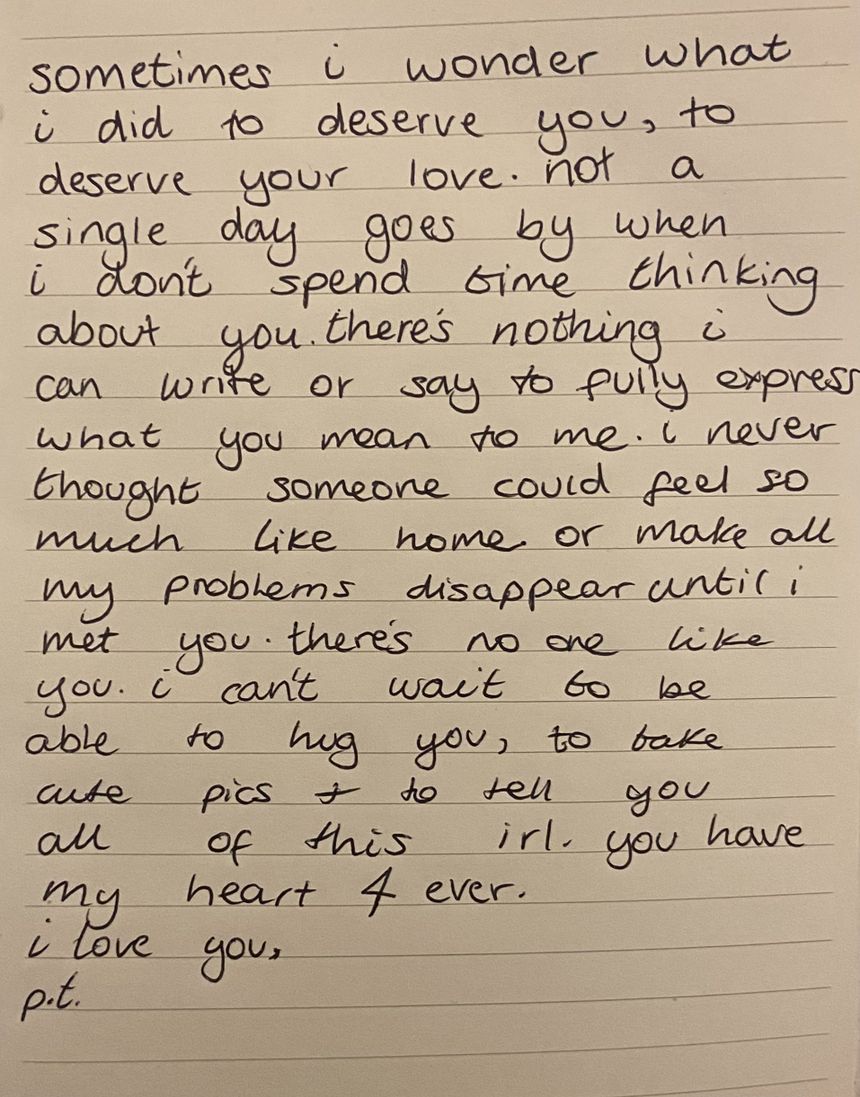
This was the best example of written communication i could give trust me.
When a message is conveyed through written words, it is called written communication.
Definition for your notes:
Written communication is the exchange of information through written words, such as emails, letters, reports, notices, and messages.
When your fingers do the talking and your mouth gets unemployment, that's written communication. 😂
For example, texting, "Bro, I'm cooked 💀," because apparently even your failure deserves written documentation. 😭
Examples: Business emails , Formal letters ,Reports, Notices and Written instructions
Imagine your manager clearly writes in an email that the report must be submitted by Friday.
Now nobody can show up on Thursday with, "Sir, you never told me verbally!"
The email has receipts. Your excuse has left the chat. 💀📧
Advantages:
> You can preserve your written failure documentation for showing to your planned child which you made with your ex when you were 15 year old
Information can be reread later.
It is useful for formal communication.
Limitations:
Replies may take time.
Unclear wording can cause misunderstandings.
Tone may be difficult to interpret from text alone.
Exam focus: Practise the definition and examples of written communication. You should also be able to distinguish oral and written communication.
## Non-Verbal Communication 😶
Imagine a Computer System Organisation professor entering the classroom like a motivational speaker.
"Good morning, class! 😊 I'll give you enough time to write everything, and if anyone has any doubts, please feel free to ask me!" 😊
Meanwhile, the students are reading her facial expressions like FBI agents analysing criminal footage. 💀
Everyone has the same thought:
"Bhai, if I ask a question, my internal marks might attend their own funeral." 😭⚰️
And then there's another species of professor who promises, "I'll give you enough time to write."
Ma'am, are you teaching us or conducting a live magic show? The moment we open our notebooks, the entire board disappears faster than our motivation after seeing the exam timetable. 💀📝
The professor says, "Ask me anything!" with a smile, but her expression says, "Try it, and let's see what happens." 🙂
That, my friends, is non-verbal communication.
Definition for your notes:
Non-verbal communication is the exchange of information and feelings through facial expressions, gestures, body language, eye contact, posture, and other cues without relying primarily on words.Types and Examples of Non-Verbal Communication
1. Facial Expressions
The face can communicate emotions such as happiness, sadness, or surprise.
Example: A smile may communicate friendliness.
Funny example: Your mother asks whether you've studied today. You say nothing. She looks at your gaming screen, then at your face, then slowly raises one eyebrow. That eyebrow has delivered a more powerful lecture than your entire college faculty. 💀👁️
2. Gestures
Hand and body movements can communicate a message.
Example: A thumbs-up(Thhenga) may indicate approval.
example: Your friend gives you a thumbs-up(Thenga) after your presentation. You think you've impressed the entire class. Actually, he just wants to know whether you're coming to the canteen. Your confidence has entered the wrong meeting. 😂
3. Eye Contact
Eye contact can indicate attention or engagement during a conversation.
Example: Maintaining appropriate eye contact during a meeting.
The professor asks a question. You suddenly become deeply fascinated by your notebook, your shoes, and the floor tiles. Anything except eye contact, because apparently the professor's gaze comes with a surprise viva. 💀
4. Posture and Body Language
The way a person sits or stands can influence how their message is interpreted.
Example: An attentive posture during a meeting may show interest.
One student sits straight, nods confidently, and looks extremely professional. Ask them what the professor just explained, and they'll look at you like you've requested the source code of the universe. 😭
Exam tip: For a question on non-verbal communication, practise writing the definition and at least four examples.
Remember, gestures and expressions do not always have the same meaning. Their interpretation can depend on context and culture.
## Visual Communication

I Guess this can be one of the best way to teach you what exactly is visual communication. i don't even need to tell you what i want to tell you but you can understand(Iykyk)
Visual communication uses images, symbols, charts, diagrams, and other visual displays to explain or convey information.
Definition for your notes:
Visual communication is the process of conveying information and ideas through visual elements such as images, symbols, charts, graphs, and diagrams.
Examples:
A chart showing a company's annual sales.
A road sign indicating a speed limit.
A diagram explaining the communication process.
A graph showing website traffic.
Imagine a teacher showing a graph instead of reading 50 numbers aloud.
Students can understand the pattern more quickly. Nobody needs to hear all 50 numbers—otherwise the entire class might enter battery-saver mode before the graph even appears. 🔋😭
## Formal and Informal Communication
Imagine you need to request an assignment extension from your professor. You write two messages.
| Which One Would You Choose |
|---|
| Cell 1 |
| Cell 4 |
| Dear Sir, I would like to request an extension for submitting the assignment due to an unforeseen circumstance |
Which message is more appropriate for your professor?
Obviously, Message C. Your professor is not your group-chat admin. 😭
## Formal Communication vs Informal
## Formal
Suppose there is a case where you are frustrated and annoyed and exausted as well and in between your professor told you to go on 4th floor and bring him his mouse then what you would say?
> Sure sir! My pleasure
Basically you'll keep the conversation concise , to the point and respectful(Exam me number lene ke chochle)
Definition for your notes:
Formal communication is the official exchange of information through established channels, procedures, and professional standards within an organisation.
Examples:
Official emails from Human Resources (HR).
Instructions from a manager.
Formal notices and circulars.
Official reports and business letters.
Imagine emailing your professor:
"Respected Sir, I request an extension for my assignment."
Meanwhile, in the class group, you write:
"Bhai, deadline badhwa do, warna meri academic antim yatra nikal jayegi." 💀
Same request, different communication style. One wears a tie; the other wears emotional damage. 😭
## Informal Communication 😂
Imagine the same situation as you were before frustrated, annoyed and exauseted and this time this is your friend and asking you to go to cateen and buy you a samosa. How respectfully you would responce?

Literally this might be your reaction in that case.
Definition for your notes:
Informal communication is the exchange of information through casual and unofficial interactions that do not necessarily follow established organisational channels.
Examples:
Casual conversations between colleagues.
Friendly discussions during lunch.
Informal messages between teammates.
Casual discussions about a project.
Informal communication can be fast and natural, but it may not be sufficient for every official instruction.
explanation:
The university has not announced that tomorrow's class is cancelled.
One student says, "My friend's cousin knows the class representative."
Three minutes later, the entire class is planning a picnic. The professor is still preparing the lecture while the rumour has already graduated. 😂📢
## Communication Barriers
Imagine telling your friend:
"Meet me at the library tomorrow at 9 a.m."
You said it clearly. Your friend heard the message—but arrives at 9 p.m. because they thought you meant evening.
Or perhaps you gave the correct time, but your friend's phone had no network.
These problems can interrupt communication or change the meaning of a message. They are called communication barriers.
Definition for your notes:
Communication barriers are obstacles that prevent a message from being transmitted, received, or understood effectively.
Let's understand the main categories.
## Physical Barriers
Physical barriers are environmental or physical conditions that interfere with communication.
Definition for your notes:
Physical barriers are environmental or physical obstacles that interfere with the effective transmission or reception of a message.
Examples:
Loud noise in an office.
Poor telephone connectivity.
A large distance between speakers.
Faulty communication equipment.
Funny explanation:
The teacher is explaining the communication process online, but the internet is so bad that all you hear is:
"...tion...cess..."
The student has to study the Wi-Fi syllabus before the actual syllabus. 💀📶
## Language Barriers 🗣️
Language barriers can arise when the sender and receiver use different languages, unfamiliar vocabulary, difficult terminology, or unclear expressions.
Definition for your notes:
Language barriers occur when differences in language, vocabulary, pronunciation, or the use of complex words prevent people from understanding a message correctly.
Examples:
Using technical jargon with a beginner.
Giving instructions in a language the receiver does not understand.
Using unfamiliar words.
Funny explanation:
The manager says, "We need to optimise the backend infrastructure."
The new intern wonders if they need to clean the building at the back of the office. 😭
One meeting, two completely different mental pictures.
In professional communication, language should clarify meaning—not exist merely to show off a vocabulary that nobody asked for.
## Psychological Barriers
Psychological barriers arise from emotions, attitudes, stress, fear, or assumptions.
Definition for your notes:
Psychological barriers are mental or emotional factors, such as stress, fear, prejudice, and lack of confidence, that interfere with effective communication.
Examples:
An employee is afraid to ask questions.
A student is too nervous to clarify an instruction.
A manager assumes an employee is careless without listening to the explanation.
Funny explanation:
The teacher says, "Come to my office after class."
The student spends the entire day thinking:
"That's it. My career is finished. I should start a new life under a different identity." 😭
Meanwhile, the teacher only wanted to discuss the assignment.
Fear and assumptions have turned a normal sentence into a full psychological thriller. 💀
## Organisational Barriers 🏢
These barriers are caused by an organisation's structure, rules, hierarchy, or communication systems.
Definition for your notes:
Organisational barriers are obstacles caused by an organisation's structure, policies, hierarchy, or communication procedures that delay or distort information flow.
Examples:
Too many levels of approval.
Important information failing to reach the right department.
Unclear responsibilities between teams.
Excessive bureaucracy.
explanation:
A developer needs approval for one tiny feature.
They ask five managers, complete three forms, and attend two meetings.
By the time approval arrives, the client has changed their mind and the feature has become an archaeological discovery. 💀
## Semantic Barriers 📝
Semantic barriers occur when the sender and receiver interpret the meaning of words, phrases, or symbols differently.
Definition for your notes:
Semantic barriers occur when the meaning of words, phrases, or symbols is interpreted differently by the sender and the receiver.
Example: The manager says:
"Complete the task soon."
One employee thinks it means today. Another thinks it means sometime this week. A third has added it to a vision board for next year. 💀
The problem is that the word "soon" has no clear deadline.
Remember the difference:
Language barrier: Someone may not understand the language, vocabulary, or terminology being used.
Semantic barrier: The sender and receiver interpret the meaning of a word or message differently.
## Cultural Barriers 🌍
Cultural barriers can arise when differences in values, beliefs, customs, gestures, or communication styles cause misunderstanding.
Definition for your notes:
Cultural barriers arise when differences in cultural values, customs, beliefs, or communication styles lead to misunderstanding.
Examples:
Different interpretations of gestures.
Different expectations about formality.
Different preferences for direct or indirect communication.
Funny explanation:
A gesture that seems friendly in one culture may be confusing or inappropriate in another.
Imagine confidently using a gesture in an international meeting and accidentally creating a diplomatic side quest. 😭🌍
Like blinking eyes by seeing someone is mars alien tradition or culture and they are doing it with a girl here and next minute seeing himself in prision or writting essay in court
Same hand, different cultural rulebook.
Cultural awareness is especially important when communicating with international teams or people from different backgrounds.
## How to Overcome Communication Barriers
In an exam, defining barriers may not be enough. If the question asks how to overcome them, these points can help.
Definition for your notes:
Communication barriers can be overcome by using clear and simple language, choosing an appropriate communication channel, reducing distractions, encouraging feedback, listening actively, and respecting cultural and individual differences.
## Use Simple Language
Choose clear, familiar words instead of complicated expressions.
Instead of saying, "Kindly initiate the execution of the aforementioned task," just say, "Please start the task."
Same instruction, fewer words, and significantly less suffering. Shakespeare is not required for a Monday morning email. 💀
## Choose the Right Communication Channel
Use an appropriate medium for the message. For example, use an official email or notice to communicate an important policy.
Your company cannot announce a serious work-from-home policy through a random meme and then blame employees for not following it. The meme is funny; the HR department is not. 😭
## Reduce Noise and Distractions
Choose a quiet and suitable environment for important discussions.
Funny explanation: If your presentation sounds like it is being broadcast from a construction site, maybe move away from the drilling machine before discussing quarterly profits. 🔊💀
## Encourage Feedback
Sab ka lo, ek ek karke lo(Feedback)
Ask whether the receiver understood the instructions and encourage them to ask questions.
The teacher asks, "Is everything clear?"
The whole class says, "Yes, sir!"
Then the teacher asks one student to explain the topic.
Silence. Even the ceiling fan suddenly seems uncomfortable. 😭
Proper feedback reveals whether learning actually happened.
## Listen Actively
Pay attention to the speaker and allow them to finish before responding.
Your friend tells you a ten-minute story about their breakup. You want to interrupt with "Block them!" after the first 30 seconds.
Instead, you listen to the whole story first. Congratulations, you've demonstrated active listening instead of operating as a one-person advice vending machine. 😂
## Avoid Assumptions
If something is unclear, ask for clarification rather than guessing.
Funny explanation: Your manager says, "Please finish it soon."
Instead of assuming you have a month, ask for the actual deadline. Your imagination may be creative, but it is not an approved project-management tool. 💀
## Respect Cultural and Individual Differences
Consider differences in language, culture, values, and individual perspectives.
Funny explanation: Not everyone communicates, reacts, or interprets gestures the same way. Before declaring someone rude, remember that their communication style may simply be different from yours.
Not every misunderstanding needs to become a three-season Netflix drama. 😭The Golden Rule 🏆
If a message is important, don't just ask:
"Did I send the message?"
Also ask:
"Was the message understood correctly?"
Sending an email is easy. Making sure it did not create seven new misunderstandings is the real skill. 💀
[quiz:JTdCJTIycXVlc3Rpb24lMjIlM0ElMjJXaGljaCUyMG9mJTIwdGhlJTIwZm9sbG93aW5nJTIwaXMlMjBhbiUyMGV4YW1wbGUlMjBvZiUyMHdyaXR0ZW4lMjBjb21tdW5pY2F0aW9uJTNGJTIyJTJDJTIyb3B0aW9ucyUyMiUzQSU1QiUyMkElMjBmYWNpYWwlMjBleHByZXNzaW9uJTIyJTJDJTIyQSUyMGJ1c2luZXNzJTIwZW1haWwlMjIlMkMlMjJBJTIwaGFuZCUyMGdlc3R1cmUlMjIlMkMlMjJFeWUlMjBjb250YWN0JTIyJTVEJTJDJTIyY29ycmVjdEluZGV4JTIyJTNBMSUyQyUyMnF1aXpJZCUyMiUzQSUyMnF1aXpfZXZ1ZHMzdmpvJTIyJTJDJTIycSUyMiUzQSUyMldoaWNoJTIwb2YlMjB0aGUlMjBmb2xsb3dpbmclMjBpcyUyMGFuJTIwZXhhbXBsZSUyMG9mJTIwd3JpdHRlbiUyMGNvbW11bmljYXRpb24lM0YlMjIlMkMlMjJvcHRzJTIyJTNBJTVCJTIyQSUyMGZhY2lhbCUyMGV4cHJlc3Npb24lMjIlMkMlMjJBJTIwYnVzaW5lc3MlMjBlbWFpbCUyMiUyQyUyMkElMjBoYW5kJTIwZ2VzdHVyZSUyMiUyQyUyMkV5ZSUyMGNvbnRhY3QlMjIlNUQlMkMlMjJjJTIyJTNBMSUyQyUyMmlkJTIyJTNBJTIycXVpel9ldnVkczN2am8lMjIlN0Q=]